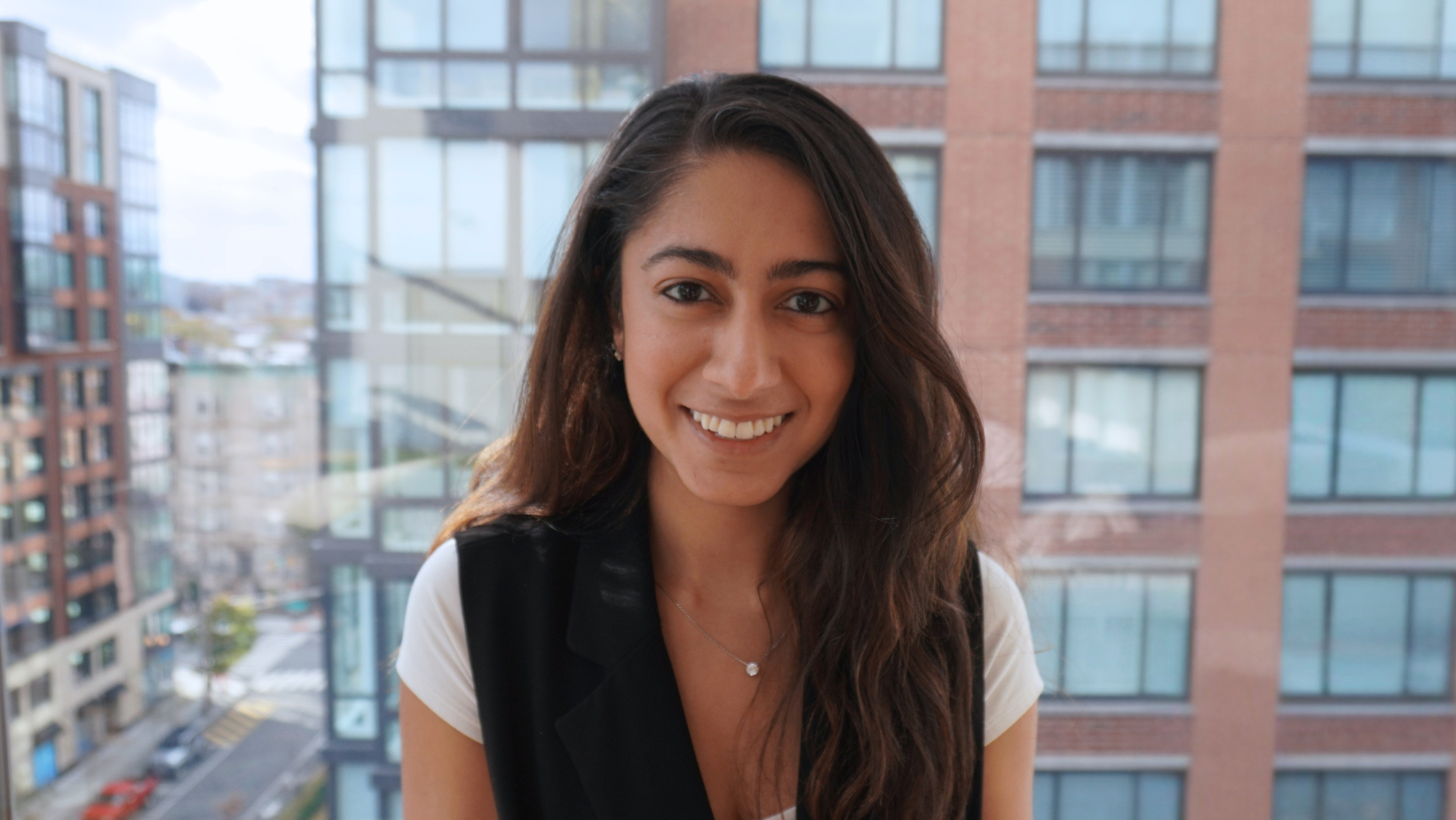
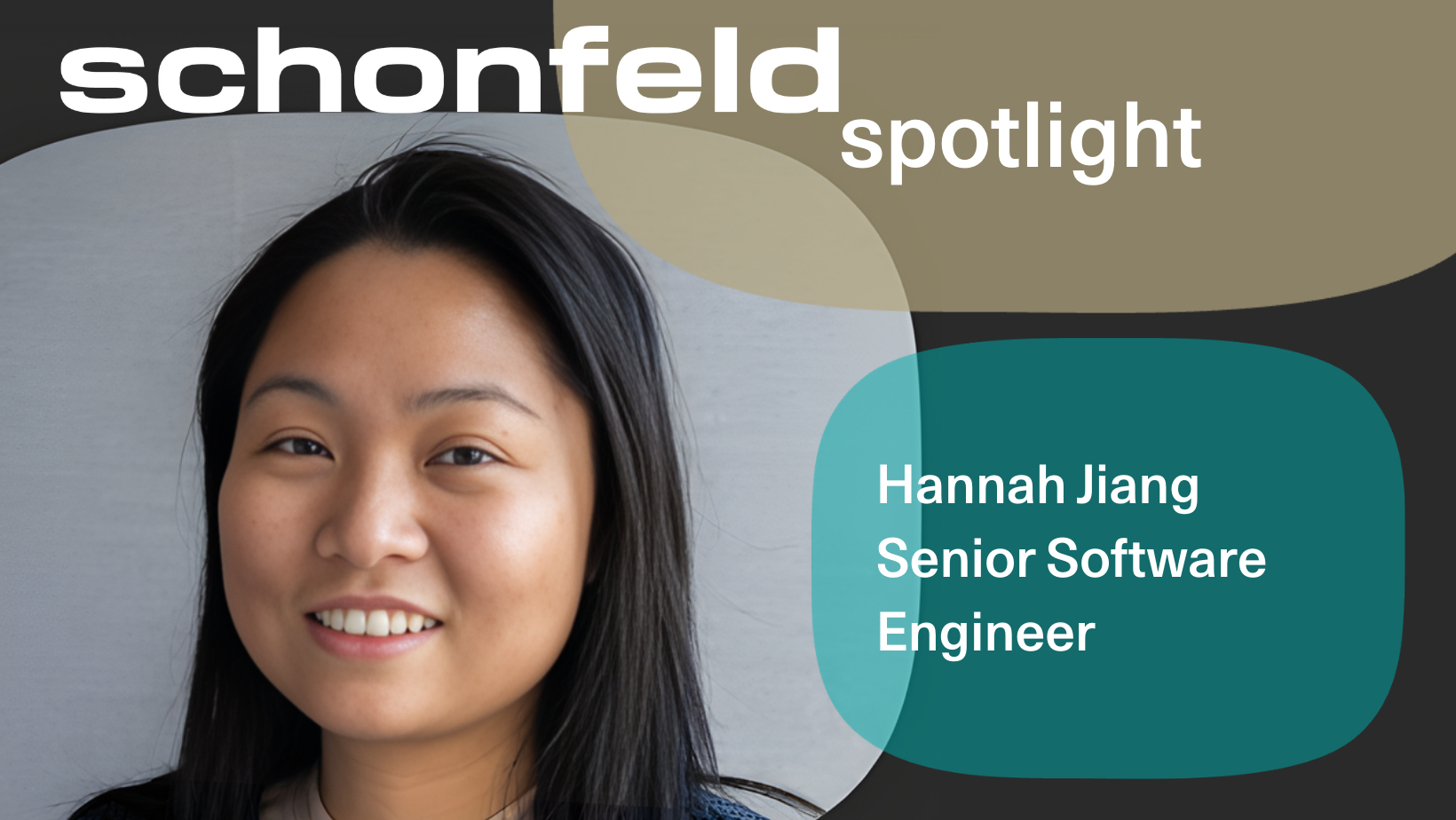
Q&A with Hannah Jiang, Senior Software Engineer at Schonfeld
Tell us about your day-to-day.
As a Senior Software Engineer, I divide my time between collaboration and hands-on development. Roughly 10% of my day is spent meeting with teams to pinpoint where AI can help streamline workflows and unlock new capabilities. The other 90% of my day is devoted to building out those solutions.
Taking a step back, how did you get here?
I immigrated to the U.S. from China as a teenager and later earned my degree in physics and computer science. After I graduated, I spent a decade in accounting, preparing partnership and corporate tax returns.
Over time I saw how technology was beginning to automate much of that work, so I decided to get ahead of the curve and pivot back to tech. I enrolled in an intensive three-month coding bootcamp and later landed a software-engineering role at BlackRock, building and maintaining a large data warehouse platform.
When did you join Schonfeld, and how has your role at the firm evolved since then?
I joined Schonfeld in 2022 as a Site-Reliability Engineer (SRE), combining infrastructure know-how with software development to improve system reliability. About nine months later, the launch of ChatGPT changed everything.
Schonfeld recognized its potential early on and I was able to pivot to a newly-created AI engineering team tasked with getting secure, easy-to-use AI tools into the hands of every employee. Today, I use AI to write software that helps more people at the firm harness AI; it’s a continuous cycle of technology improving technology.
Is there anything that you’ve worked on that surprised you?
Yes. Last year I spent two weeks in our Hong Kong office, embedded with a 20-person portfolio manager group. I met with every PM, analyst, quant developer and researcher to understand their workflows and find the right solution to their problems – including both AI and non-AI tools.
The team I visited has a very innovative culture, and the head of the group is a big proponent of incorporating AI. Seeing the rate of adoption on their team, and their eagerness to learn more, was incredibly rewarding. The Q&A sessions were highly interactive.
Professionally, it felt like being an AI evangelist; personally, it was a chance to reconnect with a region I hadn’t visited in years. I never imagined a software engineering role would take me halfway around the world to help drive AI adoption on the investment desk!
How have the firm’s AI capabilities advanced since you joined?
When I first arrived, AI lived mostly in small pockets – primarily data scientists experimenting with machine learning models for quant research. Fast forward to today and it’s firmwide. Our internal ‘SchonAI’ platform is used by a large majority of employees. Our largest group of users are Portfolio Managers, who have been very enthusiastic about AI.
Across the firm the mindset has shifted from Should I use AI? to How can I use AI? People look at repetitive tasks and ask whether automation can help. The result of greater AI adoption is a more technically curious culture where employees at every level actively seek out AI-driven efficiencies.
More